 Give us Feedback

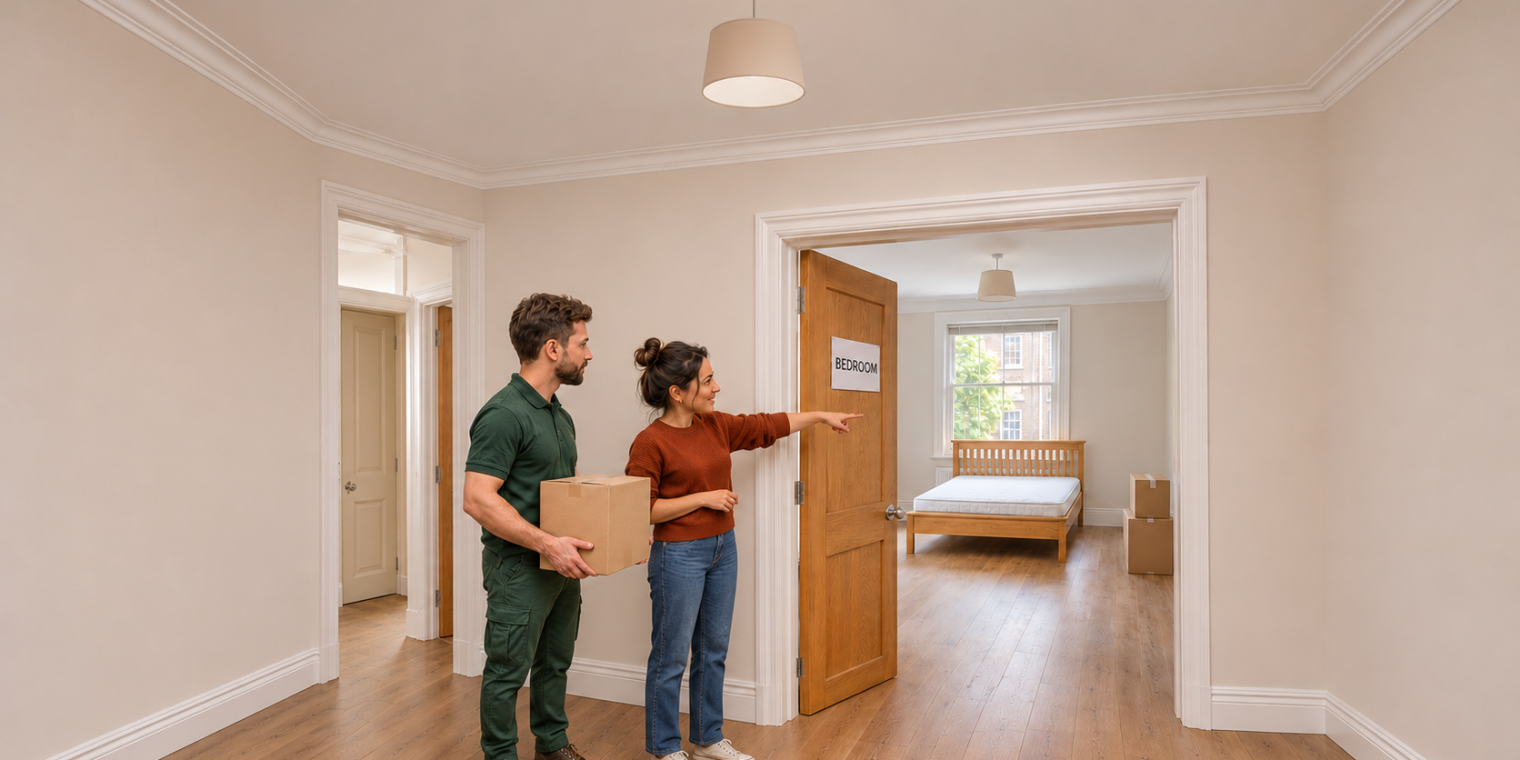
House removals do not finish when the van reaches your new address. If boxes fill the bedroom before the bed arrives, or a wardrobe lands behind the sofa, you can spend your first evening moving the same things twice. A simple unloading plan helps everyone put belongings where they can stay.
For a London home with a narrow hallway, shared entrance or limited floor space, decide room destinations before moving day. Use this guide alongside our moving house checklist to plan the arrival stage.
Give each room a clear name
“Spare room” can mean different things to different people. Choose labels that describe the new property: “Bedroom 1 – front”, “Bedroom 2 – rear” or “Study – ground floor”. Put matching signs beside the doors, using a method that will not damage the surface.
Label boxes for their destination, even if that differs from the room they came from. A kitchen cupboard that will become bathroom storage needs a bathroom label. Add the floor where helpful, and brief anyone meeting the movers so there is one agreed naming system.
Plan furniture positions before the first box arrives
Sketch a rough room layout showing beds, wardrobes, sofas and tables. It need not be to scale, but check dimensions rather than assuming everything will fit. Leave room to open doors and drawers, and keep access to sockets and cupboards where you need it.
Choose a box area in each room that leaves the intended furniture positions empty. For example, bedroom boxes might sit against the wall opposite the bed, while the bed space and route from the door stay clear. Avoid creating unstable stacks just to save floor space.
Agree the house removals unloading priorities
Tell the moving team what matters at the destination before they load the van. Safe loading, weight distribution and access will affect what can come off first, so treat your preferred order as a discussion rather than a fixed instruction.
A useful starting point is:
- Large furniture: agree its position before surrounding it with boxes, where the loading sequence allows.
- Bed parts and mattresses: direct them to the correct bedroom and leave working space if assembly has been arranged.
- Room-labelled boxes: place them in the agreed areas with labels facing out.
- First-evening supplies: keep these easy to reach throughout the move, preferably travelling with you.
Confirm dismantling or reassembly requirements when requesting your quote. Do not assume assembly is included, and keep the correct fixings and instructions clearly identified with each item.
Keep the entrance and carrying route clear
Resist using the hallway as a temporary store. A row of boxes beside the front door can leave too little room to turn with furniture. Keep children and pets away from the carrying route, and choose a safe place for coats, bags and cleaning supplies.
In a block of flats, check the building’s arrangements for moving, lift use and shared access with the managing agent or concierge in advance. Tell the movers about any constraints. Follow London Fire Brigade’s guidance on shared areas and fire doors: keep communal corridors clear and do not prop fire doors open.
Choose one person to direct room placement
Where possible, have one adult available to answer placement questions. Stand clear of the route and give directions before an item is carried into a tight space. If the layout needs changing, discuss the new position before moving more furniture around it.
Keep a short list of exceptions: a dining table going into the study, a box of kitchen equipment staying unopened, or a chest of drawers intended for the landing only if there is adequate clear space. These details are easy to forget during home removals.
Check the delivery, then unpack in stages
Use your house removals inventory to check that belongings have arrived and note anything that needs discussing with the team. Look around each room before the movers leave, including where large items have been placed.
For the first evening, concentrate on somewhere to sleep, bathroom essentials, food and drinks, chargers and any medication you need. Keep packaging together without blocking exits. Decorative items and non-essential cupboards can wait until you have clear space to work.
Plan your London home removal
JP Man & Van can help carry, load, transport and unload belongings for house and flat removals in London. Share both addresses, floor levels, lift details, your inventory and any furniture assembly requirements when discussing the move.
Contact JP Man & Van or call 07925405549 to discuss your moving date and delivery plan.